
Last updated: October 7, 2026
Buying a used luxury or performance car in Dubai can be tempting. Low mileage, a clean exterior and a complete service history may look reassuring, but none of them tells the whole story. Premium cars often combine complex electronics, advanced transmissions, adaptive suspension and expensive mechanical components. Problems in these systems may not be visible during a casual inspection.
That is why a proper pre-purchase inspection should go beyond the service book.
Start With Documents and Service History
The first step is checking the car’s history. The VIN should match across the vehicle and its documents, while the mileage should be consistent with available service records.
Look for evidence of regular maintenance, major repairs, previous modifications and work carried out outside the manufacturer’s recommended schedule.
A complete service history is a positive sign, but it does not guarantee that the car has no hidden problems. A vehicle can be well documented and still require expensive repairs.
A Full Diagnostic Scan Goes Beyond the Check Engine Light
Modern luxury cars contain multiple electronic control units, so scanning only the engine is not enough.
A professional diagnostic check can identify stored or current faults across systems such as the transmission, suspension, brakes, climate control and body electronics. Depending on the model, it may also include driver-assistance and safety systems.
Diagnostic data can reveal issues that are not visible on the dashboard during a normal test drive.
Check the Engine, Turbocharging and Cooling System
The engine should be inspected both visually and during operation.
A cold start can reveal unusual noises, unstable idle or other issues that may disappear once the engine warms up. The inspection should also look for oil or coolant leaks, signs of overheating and the condition of radiators and intercoolers.
On turbocharged cars, boost operation and available diagnostic data can provide additional information about the engine’s condition.
Transmission and Drivetrain Can Hide Expensive Problems
Transmission problems are not always obvious during a short drive. Delayed engagement, harsh shifts, unusual vibrations or noises can indicate potential issues.
The drivetrain should also be checked, including components such as driveshafts and differentials where applicable.
A single symptom is rarely enough to identify the cause, which is why transmission and drivetrain checks should be part of a wider inspection.
Suspension, Brakes and Tyres Tell a Story
Tyres can provide useful clues about the car’s condition. Uneven wear may point to alignment issues, suspension problems or previous damage.
The inspection should also cover brake discs and pads, suspension components, wheel geometry and any signs of play or unusual noise.
For cars with air or adaptive suspension, these systems deserve additional attention. Aftermarket components should also be checked for quality and correct installation.
Bodywork, Paint and Previous Repairs
A clean-looking exterior does not necessarily mean the car has never been repaired.
Inspecting panel gaps, paint consistency and areas around doors, bumpers and other body panels can help identify previous work. PPF or vinyl may also hide parts of the original paint, while signs of disassembly can indicate that components have been removed or replaced.
Paint thickness can be useful, but it should not be treated as proof of an accident on its own. Several factors need to be considered together.
Electronics and Comfort Systems Are Part of the Inspection
Luxury cars rely heavily on electronics, and repairing these systems can be expensive.
During an inspection, check functions such as the climate system, multimedia, cameras, lights, seats, sensors and other electronic features available on the specific model.
Small electronic faults may seem minor compared with an engine or transmission problem, but they can become costly when multiple components are involved.
Why a Premium-Specialist Workshop Inspection Matters
Luxury and performance cars often require knowledge of specific platforms, technologies and common failure points. A general visual inspection may not be enough to identify problems in a complex vehicle.
A specialist workshop can combine electronic diagnostics with mechanical and physical inspection instead of relying on a single test.
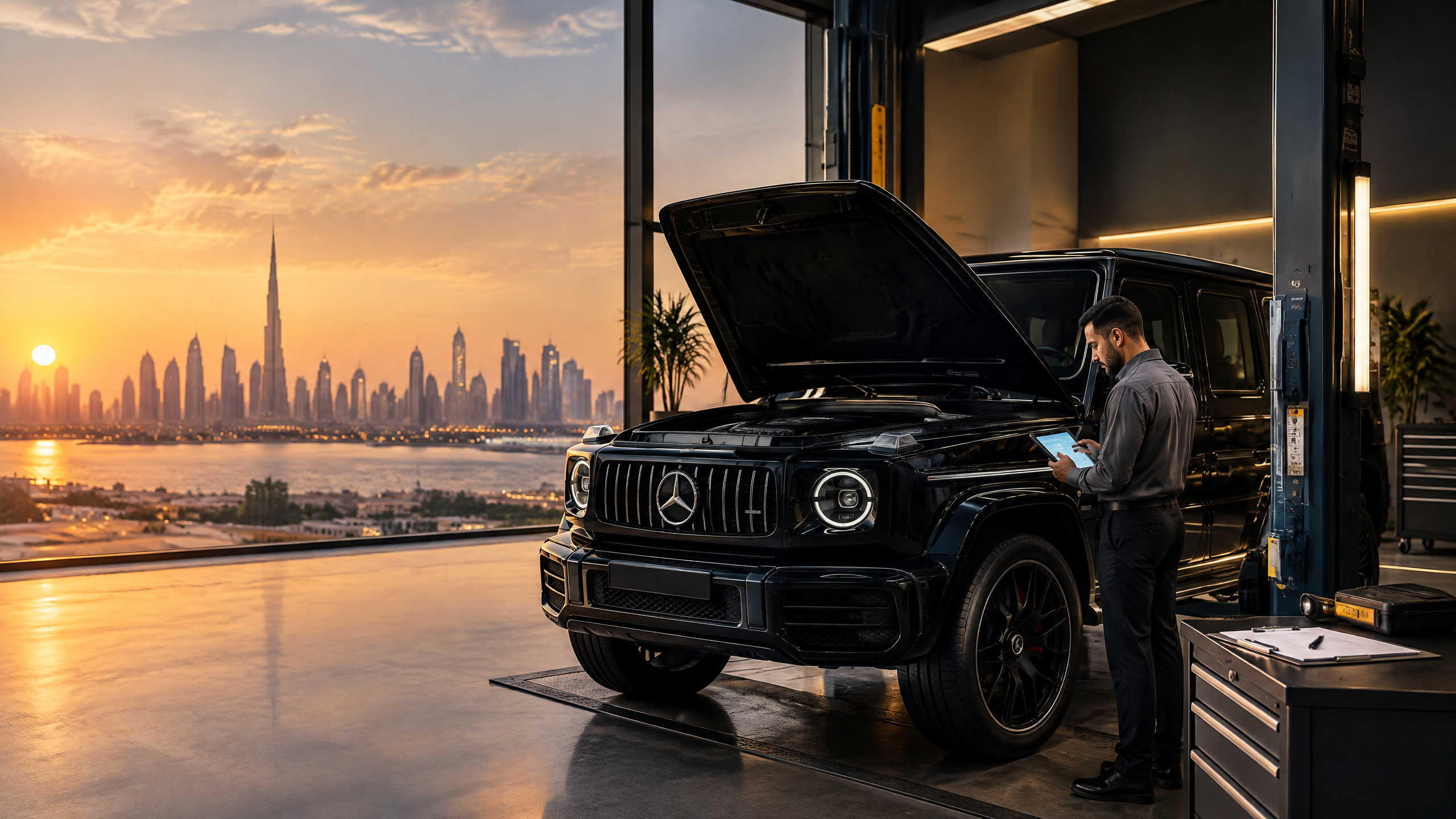
For buyers considering an expensive vehicle, a professional pre-purchase inspection at DEIZ GARAGE auto workshop can help uncover potential issues before the purchase.
What to Pay Attention to During the Test Drive
The test drive should confirm what was found during the inspection.
Pay attention to the cold start, acceleration, power delivery and transmission behaviour. Notice any vibrations at different speeds, unusual suspension noises or problems during braking.
The engine temperature should remain stable, and there should be no unexpected warning lights or changes in vehicle behaviour.
A test drive cannot replace diagnostics and mechanical inspection, but it can reveal problems that only appear when the car is moving.
What a Pre-Purchase Inspection Cannot Guarantee
Even a detailed inspection cannot guarantee that a used car will never develop a problem after purchase.
Its purpose is to reduce uncertainty and identify existing issues, signs of wear and potential future expenses.
The final decision should take into account the vehicle’s condition, service history, possible repair costs and the terms of the deal.
FAQ
Is low mileage always a good sign on a used luxury car?
Not necessarily. Low mileage is useful, but the car’s age, maintenance history, storage conditions and actual mechanical condition are equally important.
Can diagnostic fault codes be cleared before a sale?
Yes. Fault codes can sometimes be cleared, which is why a professional inspection should not rely only on a scan. Diagnostic results should be considered together with the car’s physical condition and history.
Should a modified performance car get extra checks?
Yes. Modifications can affect the engine, transmission, suspension, cooling system and electronics. The quality and installation of aftermarket components should be checked carefully.
What is the most important part of a pre-purchase inspection?
There is no single check that matters most. The best approach combines documentation review, diagnostics, mechanical inspection, bodywork assessment and a thorough test drive.
Conclusion
A proper used luxury car inspection goes far beyond mileage and service history. Diagnostics can reveal electronic issues, mechanical checks can uncover wear and leaks, while bodywork inspection can expose signs of previous repairs.
For premium and performance cars, combining these checks with a thorough test drive provides the clearest overall picture. An inspection cannot eliminate every risk, but it can significantly reduce uncertainty and help the buyer make a more informed decision before signing the deal.
0 Comment