


Last updated: October 7, 2026
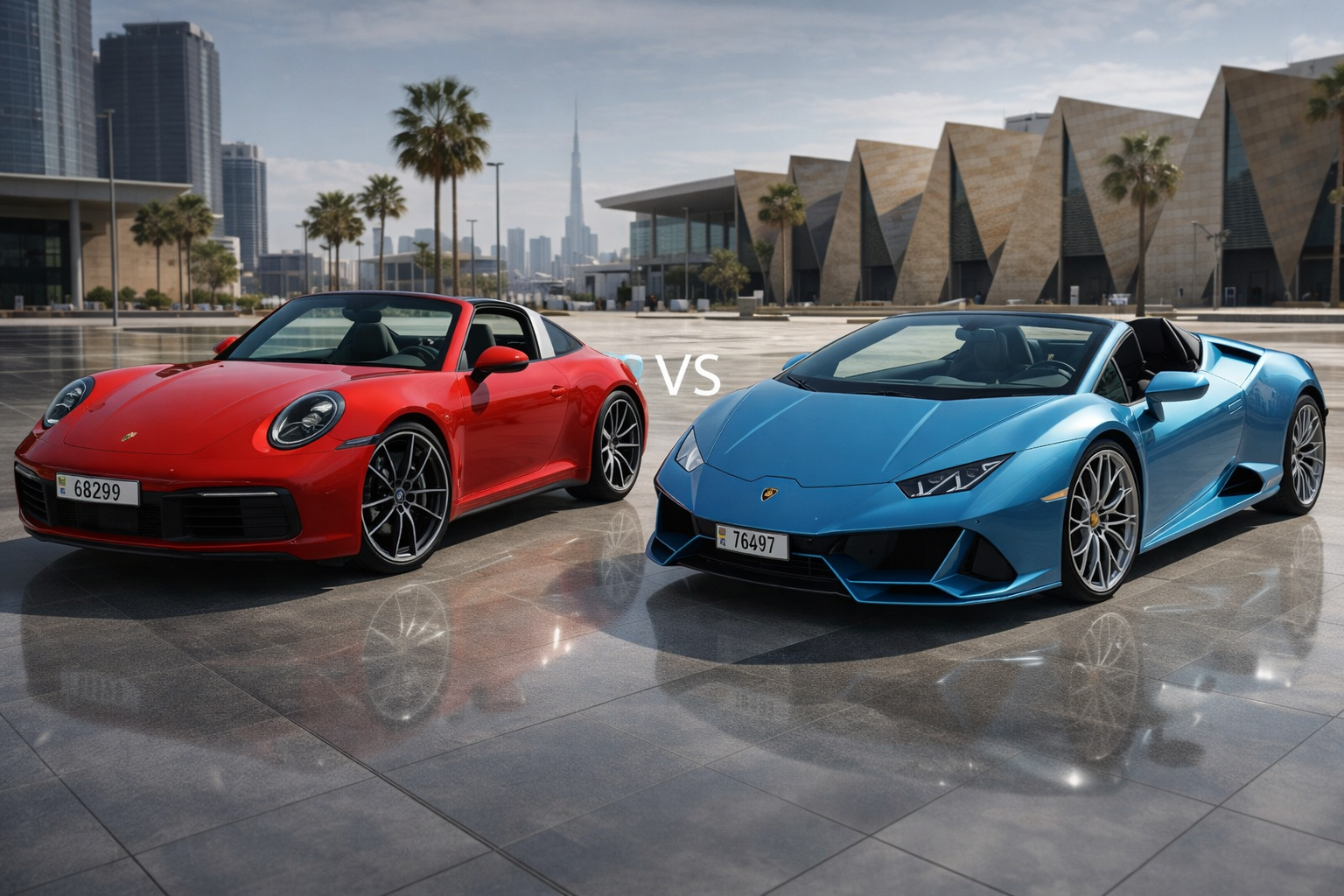
Deciding between a Porsche and a Lamborghini comes down to what you want from a rental: precision and daily-drivable performance, or raw drama and head-turning presence. If you want a focused, versatile driving experience that balances thrilling performance with comfort and practicality, pick a Porsche; if your goal is unmistakable spectacle and visceral excitement, choose a Lamborghini.
This article breaks down performance, design appeal, the rental process, and how each brand fits different occasions so you can match the car to your plans and budget. Expect clear comparisons of handling, comfort, cost, and the kind of reactions each car draws, helping you pick the right exotic for your day or weekend.
Performance Comparison
This section contrasts straight-line acceleration, on-road handling, and engine layouts so you can match performance to your driving goals. Expect faster 0–60 mph times from many Lamborghinis, but tighter handling and everyday usability from many Porsches.
Acceleration and Speed
Lamborghini models you’ll commonly rent—like the Huracán—often push 0–60 mph in the mid‑3‑second range, with top speeds above 190 mph. If raw, dramatic acceleration and a high terminal speed matter to you, Lamborghini typically delivers that visceral launch.
Porsche models such as the 911 Carrera S or Turbo S balance quick launches with consistency; a Carrera S reaches 0–60 mph in roughly 3.0–3.5 seconds while a Turbo S can dip into the low‑2s. Porsche’s repeated, controlled acceleration makes it easier to exploit on public roads or tight track sessions.
Consider traction systems: Lamborghini’s AWD in many models gives excellent launch grip, while Porsche’s advanced AWD and electronic aids offer quicker, repeatable runs with less drama. Choose Lamborghini for headline-grabbing sprints; choose Porsche if you want rapid times plus predictable repeatability.
Handling and Driving Experience
Porsche emphasizes precision and feedback. The 911’s rear-engine balance and responsive steering let you place the car with small inputs, which benefits carved canyon roads and technical tracks. You’ll notice smaller, more connected steering weights and confidence under braking.
Lamborghini focuses on excitement and theatricality. Its mid‑engine layout (Huracán) produces sharp turn‑in and high lateral grip, but can feel more aggressive at limit. Steering may feel heavier and more immediate, rewarding decisive inputs and a confident driving style.
If you value driver engagement and the ability to modulate the car through a sequence of corners, Porsche usually rewards you with greater finesse. If you want bold turn‑in, high straight‑line grip, and a more visceral, showy feel, Lamborghini will satisfy that preference.
Engine Specifications
Porsche engines range from flat‑six units in the 911 to turbocharged variants and hybrid setups in other models. Expect power outputs from roughly 380 hp in base Carrera models up to 640+ hp in Turbo S versions. Porsche often pairs turbos with sophisticated cooling and efficient packaging.
Lamborghini typically uses naturally aspirated V10s (Huracán) or twin‑turbo V8/V12 units in larger models, with power commonly between 560–640+ hp for rental favorites. The naturally aspirated V10 delivers a high‑revving soundtrack; turbo‑charged Lamborghinis trade some linear feel for greater peak torque.
Review drivetrain details when you book: gearboxes (Porsche PDK vs Lamborghini DCT), drive layout (RWD/AWD), and available electronic modes change how engine power reaches the wheels. Those specs directly affect throttle response, shift speed, and your ability to exploit power on the road.
Brand Appeal and Design
Porsche focuses on timeless proportions and track-derived functionality, while Lamborghini emphasizes aggressive, attention-grabbing shapes and theatrical presence. Both deliver strong visual impact; your preference should hinge on whether you value subtle engineering cues or bold visual drama.
Exterior Aesthetics
Porsche presents restrained lines, low-slung profiles, and recognizable round headlights that signal continuity across generations. The 911’s silhouette prioritizes aerodynamic efficiency and balance; that translates to predictable handling and a car that reads as performance-focused from any angle.
Lamborghini uses sharp creases, hexagonal elements, and scissor or large air intakes to create an immediate spectacle. A Huracán or Aventador draws attention at a distance and communicates raw power; this suits you if you want to be seen and to feel an aggressive stance the moment you open the door.
Consider practical factors: Porsche’s designs tend to be easier to park and more usable in daily settings, while Lamborghini’s low front lip and wide track can make urban driving and curb clearance more challenging.
Interior Luxury and Comfort
Porsche cabins combine high-grade materials with a driver-centric layout and clear instrument readouts. Expect firm bolsters, supportive seating, and tactile controls; noise insulation and ride tuning often balance comfort with sportiness so you can drive long distances without fatigue.
Lamborghini interiors prioritize dramatic styling—angular panels, contrast stitching, and cockpit-like consoles. Materials are premium, but ergonomics sometimes favor theatrics over everyday ease. Ride harshness and louder exhaust notes add to the sensory experience; that heightens excitement but may reduce comfort on long trips.
If you plan extended drives or want straightforward tech and usability, Porsche interiors typically deliver more practical comfort. If you seek a visceral, showpiece cabin where style dominates, Lamborghini aligns with that aim.
Brand Prestige
Porsche projects motorsport heritage, engineering excellence, and a reputation for usable performance. Its brand prestige appeals to those who value measurable performance, reliability, and a broad model range—from daily sports cars to track-capable variants.
Lamborghini projects exclusivity, flamboyance, and ultra-exotic symbolism. Ownership or rental signals bold taste and willingness to prioritize spectacle; this often attracts attention and conveys status in social settings.
Think about the message you want to send. Choose Porsche if you prefer understated technical credibility. Choose Lamborghini if you want to make an immediate, unmistakable statement.
Rental Experience Overview
Renting a Porsche or a Lamborghini changes depending on where you go, how long you need the car, and what protections you choose. Expect wide price gaps, varied fleet sizes by city, and different levels of dealer support that affect convenience and risk.
Availability and Location
Availability varies by city and by rental company. Larger urban centers and luxury-tourist destinations commonly stock multiple Porsche and Lamborghini models; smaller markets may only offer one or two options. If you want a specific model like a 911 or Huracán, book at least several weeks in advance, especially for weekends and holidays.
Pickup locations matter. Airport branches often have the broadest selections but higher fees. Downtown or hotel-concierge deliveries can be more convenient but sometimes require minimum-day rentals. Check whether the agency allows cross-border travel; supercar rentals frequently restrict travel outside the emirate, state, or country.
Pricing and Insurance Considerations
Daily rates differ sharply between brands and models. Porsche rentals generally start in the lower-to-mid luxury range and rise with higher trims and special editions. Lamborghinis command premium rates that reflect stronger performance and higher operating costs. Factor in seasonal surges and special-event markups when planning.
Insurance and deposits form the biggest variable in total cost. Rental companies may require a security deposit or hold on your card, plus mandatory liability or collision coverage if your personal policy doesn’t apply. Ask for a clear breakdown: base rate, taxes, delivery fees, security hold, required insurance, and optional waivers. Compare the cost of buying the agency’s damage waiver versus using your own coverage or a third-party policy.
Customer Support and Services
Customer support ranges from basic counter assistance to white-glove service. Premium agencies often include vehicle delivery, concierge booking, and 24/7 roadside assistance; smaller companies may offer lower rates but limited support. Confirm response time commitments for breakdowns and accident handling before you drive off.
Inspect the car with staff and document any pre-existing damage using timestamps or photos. Request a written explanation of what constitutes wear-and-tear versus chargeable damage. Finally, verify fuel, mileage, and return-location policies to avoid unexpected charges.
Which Should You Rent: Choosing Based on Your Needs
Decide by matching the car to a specific use, budget, and image you want to project. Think about guest capacity, driving route, noise tolerance, and how much attention you want to attract.
Occasion and Purpose
If you need a show-stopping entrance for a wedding, promotional shoot, or grand celebration, a Lamborghini delivers dramatic looks and loud exhaust notes that draw attention. Lamborghinis are best for short, high-impact appearances and scenic drives where stopping for photos matters more than comfort.
For longer drives, business trips, or a weekend where comfort and driving refinement matter, choose a Porsche. A 911 or Boxster provides superior seat comfort, better visibility, and a chassis tuned for balanced handling on highways and twisty roads.
Consider practicality: Porsches usually offer better fuel economy and trunk space for luggage or a suit bag. Lamborghinis tend to have tighter cabins and limited cargo room. Match your choice to distance, luggage needs, and whether you prefer head-turning drama or a refined driving experience.
Personal Preference and Style
If you want visceral drama—sharp styling, aggressive exhaust, and the “exotic” label—rent a Lamborghini. You’ll get instant social media impact and a highly emotional driving sensation. Expect louder interiors and more onlookers at public stops.
If you value precision, day-to-day usability, and driver engagement, pick a Porsche. Its steering feedback, predictable mid-corner behavior, and range of model options (from entry 718 to gated 911s) let you tailor the drive to your skill level. Porsches also offer easier ingress/egress and more subtle styling if you prefer refined presence over spectacle.
Balance style with comfort needs. If you or your passengers prioritize conversation, cabin quiet, and climate control during longer trips, Porsche wins. If image and sensory intensity are the priority for a short, memorable outing, Lamborghini fits better.
Summary of Pros and Cons
- Lamborghini
- Pros: Extreme styling, loud engine note, strong visual impact.
- Cons: Limited cargo, louder cabin, less practical for long drives.
- Porsche
- Pros: Balanced handling, better comfort, more model variety, practical luggage space.
- Cons: Less attention-grabbing, subtler road presence.
Use this checklist to decide quickly:
- Need for photos/attention: Lamborghini
- Long-distance comfort and luggage: Porsche
- Want raw sensory thrill: Lamborghini
- Want predictable, usable performance: Porsche
Frequently Asked Questions
Which rental option delivers the best driving experience for city cruising versus open-road performance?
For city cruising, Porsche models like the 911 or Macan generally deliver smoother ride quality, easier parking, and more forgiving steering inputs. They offer composed suspension and better low-speed manners, which makes them more practical in urban traffic.
For open-road performance, Lamborghini models such as the Huracán excel with sharper throttle response, louder exhaust character, and more aggressive chassis behavior. They reward high-speed, sweeping roads but can feel stiff and loud in stop-and-go conditions.
How do rental prices typically compare between the two brands for similar model years and trims?
Lamborghinis usually command higher daily rates than equivalent Porsches, reflecting brand positioning and demand for attention. Expect a price premium of 10–40% on average, depending on location and model.
Porsches offer a wider range of price points; a base 911 rents cheaper than an Urus or Huracán, while high-spec Turbo S or GT models can approach or exceed Lamborghini pricing. Seasonal demand and rental duration also materially affect rates.
What factors should I consider when choosing between comfort-focused handling and track-oriented dynamics?
Consider how long you will drive on public roads versus closed circuits. If most driving is city or long-distance highway, prioritize comfort, adaptive suspension, and nicer sound insulation.
If you plan spirited driving on twisty roads or a track day, prioritize low-slung aerodynamics, firm suspension, and responsive steering. Also factor in your driving skill, local traffic enforcement, and potential wear on the vehicle.
Which models are most practical to rent if I need usable cabin space and luggage capacity?
Choose a Porsche Cayenne if you need SUV practicality with usable rear seats and cargo room. The Panamera sedan also offers four-seat comfort and a larger trunk than most two-seater sports cars.
Lamborghini Urus provides the best blend of exotic looks and real cargo/passenger space among Lamborghinis. Two-seat Lambos like the Huracán and older Diablos have very limited luggage room and tight passenger space.
What insurance coverage and security deposits are usually required for high-end exotic rentals?
Rentals typically require primary insurance that covers physical damage and liability, either through the rental company’s policy or your own insurer with exotic-car endorsement. Many companies insist on a Collision Damage Waiver or loss/damage policy.
Expect large security deposits or pre-authorizations ranging from several thousand to tens of thousands of dollars, depending on model and rental duration. Verify deductible limits and whether credit card coverage supplements or conflicts with the rental’s policies.
Are there mileage limits, fuel requirements, or wear-and-tear policies that differ between these supercar rentals?
Most exotic rentals enforce mileage caps or charge per-mile overages; unlimited mileage is less common and may cost more. Confirm daily limits and overage rates before booking.
Renters must return cars with premium fuel (often 91–98 octane) and in the same condition, or face replenishment and cleaning charges. Companies also inspect for tire, brake, and interior damage and will bill for excessive wear or track use unless pre-approved.
0 Comment