April 2024’s floods left thousands of vehicles in the UAE submerged, and many of those cars later surfaced in the used market with repairs that hide their history. You should know that water can damage electronics, corrode metal, and create mechanical problems that may not show up right away, making a seemingly cheap purchase costly over time.
This guide gives you a practical checklist to spot signs of flood damage before you buy. You’ll find what to inspect—interior odors and upholstery, electrical systems, engine bay, undercarriage, paperwork—and guidance on professional inspections and steps to take if you’ve already purchased a water-damaged vehicle.
Why Flooded Vehicles Pose Special Risks
Flood-damaged cars often hide serious problems you won’t notice at first glance. Electrical wiring and connectors can corrode over time, producing intermittent faults that show up weeks or months after purchase. Mold can take hold in upholstery, carpets, and trim, creating persistent odors and potential health risks.
Water in engine oil, transmission fluid, or differentials accelerates wear and can lead to sudden mechanical failure. The vehicle’s control modules, including the engine control unit, are highly sensitive to moisture and may fail unpredictably. Airbag sensors and other safety systems can also be compromised, leaving you without critical protections.
- Hidden corrosion: progressive electrical and structural failures
- Contamination: fluids that damage internal components
- Health hazards: mold and lingering smells
- Safety system risk: airbags and ECUs may malfunction
Where to Check: Flood Damage Detection Checklist
The Smell Check
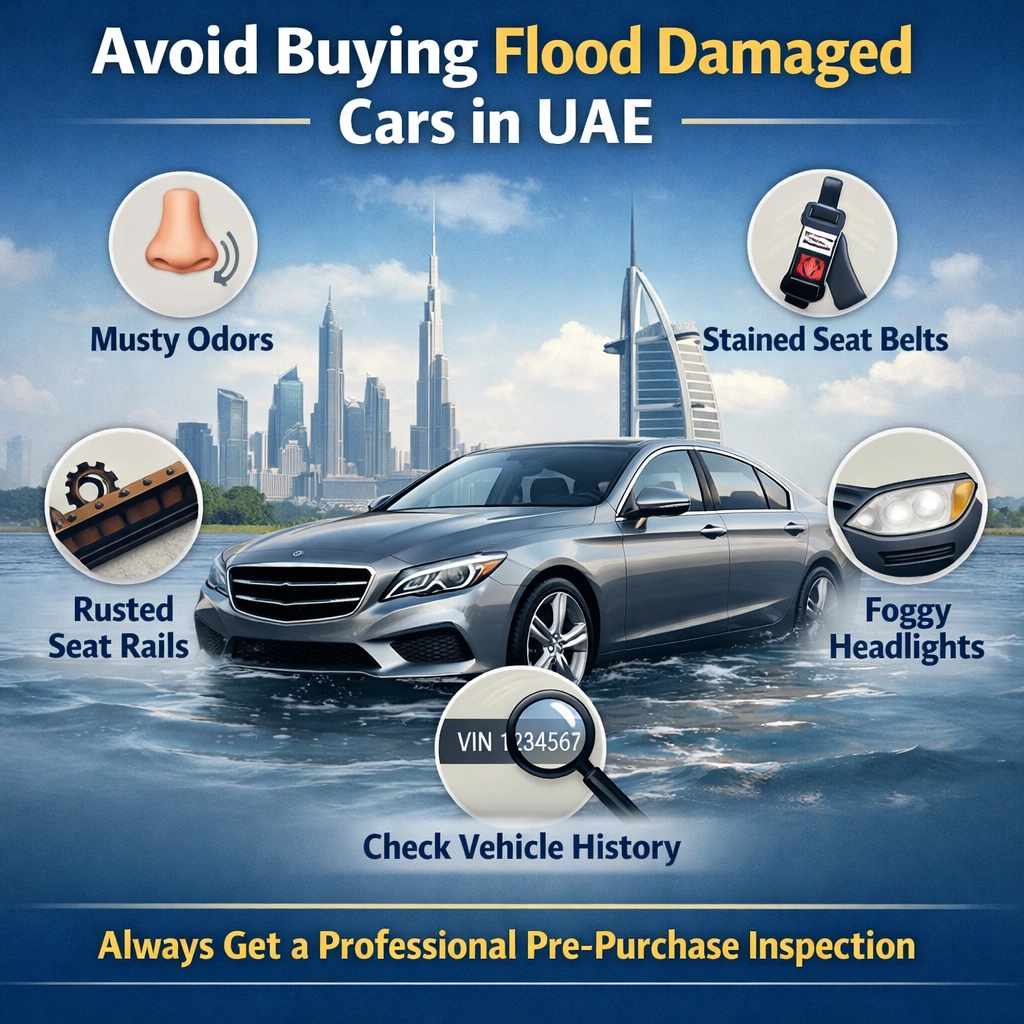
Close doors and windows, sit in the car after it has warmed in the sun for about 10 minutes, and breathe normally. A persistent musty, moldy, or damp odor that doesn’t dissipate signals past water exposure.
Beware of strong air fresheners or unfamiliar scents; they may cover unpleasant smells rather than fix underlying problems.
Cabin Surfaces and Seats
Lift floor mats and press under them; the carpet and padding should be dry and resilient.
Look under seats and along seat rails for rust, mud, or discoloration.
Feel seat foam—spongy or damp cushioning suggests water intrusion.
Open the trunk lining and inspect beneath for stains, silt, or unusual moisture.
Electronics and Controls
Switch every electrical feature on and off to confirm consistent operation.
Test windows, infotainment displays, dashboard lights at startup, interior lamps, A/C at multiple settings, rear camera, and parking sensors.
Intermittent faults or condensation inside screens point to water-related electrical damage that can surface later.
Engine Bay Inspection
Open the bonnet and scan for waterline marks on the engine block, firewall, or inner wings.
Remove the air filter cover and look for dirt, silt, or dampness.
Check the dipstick and oil cap—milky or frothy oil indicates water in the engine.
Examine fuse boxes, wiring connectors, alternator, and starter for corrosion or white/green deposits.
Underbody and Chassis
If possible, view the underside on a lift, ramp, or at least from a low angle.
Look for fresh undercoating applied unevenly—sellers sometimes hide rust this way.
Inspect exhaust pipes, suspension mounts, brake lines, and fuel tank for pitting or unusual corrosion.
Check for silt, plant matter, or sediment lodged in crevices and behind panels.
Paperwork and Vehicle History
Run the VIN/chassis number through official registries and vehicle-history services to spot flood-related flags.
Request full service records and compare dates—large gaps during major flood events can be suspicious.
Ask the seller directly about any water exposure and note their response; transparency usually correlates with trustworthiness.
Hire a Trained Inspector
If you find suspicious signs or if the price seems unusually low, pay for a professional inspection.
Qualified technicians use tools and methods you may not have and can detect hidden corrosion, contaminated fluids, and compromised electronics.
Expect inspection fees in the low hundreds; they can save you from far larger repair bills.
Steps After a Post-Purchase Discovery
If you realize the car was flood-damaged after buying it, document all issues immediately—photos, videos, and written notes.
Contact a UAE legal advisor to review potential remedies if the seller concealed the damage.
Prioritize safety: check fluids, brakes, steering, lights, and airbags before driving further, and arrange professional repairs as needed.
Common Questions Answered
- How do you verify flood history? Run the VIN through official databases, inspect interiors and electronics, and get a pro assessment.
- Why are flood-damaged cars cheaper? Water-damaged vehicles often sell for less because of hidden mechanical and electrical risks.
- Will insurance cover prior flood damage? Comprehensive policies cover flood events, but claims for pre-existing flood damage may be denied if the damage predates your policy.
Table: Quick checklist to use on-site
| Area | What to look for |
|---|---|
| Smell | Musty/moldy odor; masked by air fresheners |
| Seats & Carpets | Dampness, stains, rust on rails, spongy foam |
| Electronics | Intermittent faults, condensation, failed components |
| Engine Bay | Waterline marks, milky oil, corroded connectors |
| Underbody | Fresh undercoating, pitting, sediment, corrosion |
| Documents | VIN flags, service gaps, seller explanations |
Use this checklist methodically and walk away if multiple red flags appear.
Frequently Asked Questions
What clear warning signs tell you a used car may have had water intrusion?
Look for musty or moldy odors, damp carpeting, or water stains on upholstery and trim. Check for fogged, discolored, or cloudy instrument clusters and headlight lenses. Rust in unusual places (under carpets, behind panels), peeling dashboard texture, and electrical malfunctions (erratic gauges, nonworking lights) also signal past water exposure.
Which parts of the vehicle should you examine first for hidden moisture or early corrosion?
Start with interior low points: under floor mats, inside the trunk, and beneath seat cushions. Inspect door jambs, glovebox, and under the dashboard for rust, dampness, or mineral deposits. Examine engine bay wiring connectors, fuse box, and air intake areas for corrosion or water stains. Don’t forget wheel arches, undercarriage seams, and exhaust connections for surface rust that might indicate prolonged wet exposure.
How can you check a car’s accident and insurance history before buying in the UAE?
Request the vehicle’s chassis (VIN) number and use UAE government portals or certified history-report services to look up registration and accident records. Ask the seller for past insurance claim documents and previous registration certificates (Mulkiya) to compare mileage and owner history. Cross-check service invoices and workshop receipts for repairs that might mask flood damage.
What paperwork and seller-provided checks should you insist on to confirm the car’s condition?
Ask for the original Mulkiya, valid Emirates ID of the seller, and a full service history with stamped entries. Request any insurance claims, repair invoices, and receipts for parts replaced. Get a recent roadworthiness or technical inspection report, and verify the VIN on documents matches the chassis plate and windscreen etching.
What test-drive symptoms suggest electrical or drivetrain problems from prior flooding?
Watch for intermittent or delayed starter response, stalling, or rough idling that may indicate water-damaged ignition or fuel systems. Observe erratic dashboard lights, malfunctioning climate controls, or nonresponsive power windows and locks. Listen for unusual transmission noises, slipping, or delayed gear engagement after warm-up, which can point to water-damaged drivetrain components.
When is it necessary to order an independent inspection, and what should the inspector evaluate?
Hire a third-party inspector before finalizing a purchase if you find any suspicious signs, the seller can’t provide clear history, or the price seems unusually low. Require a comprehensive check that includes moisture meters in carpets, electronic diagnostics (OBD scan), corrosion inspection of wiring harnesses and connectors, pressure-testing seals, and an underbody inspection for structural rust. Request a written report with photos and a clear assessment of repair costs and long-term risks.
0 Comment